
Murrells Inlet Wildlife Guide: What You Can Spot on the Water
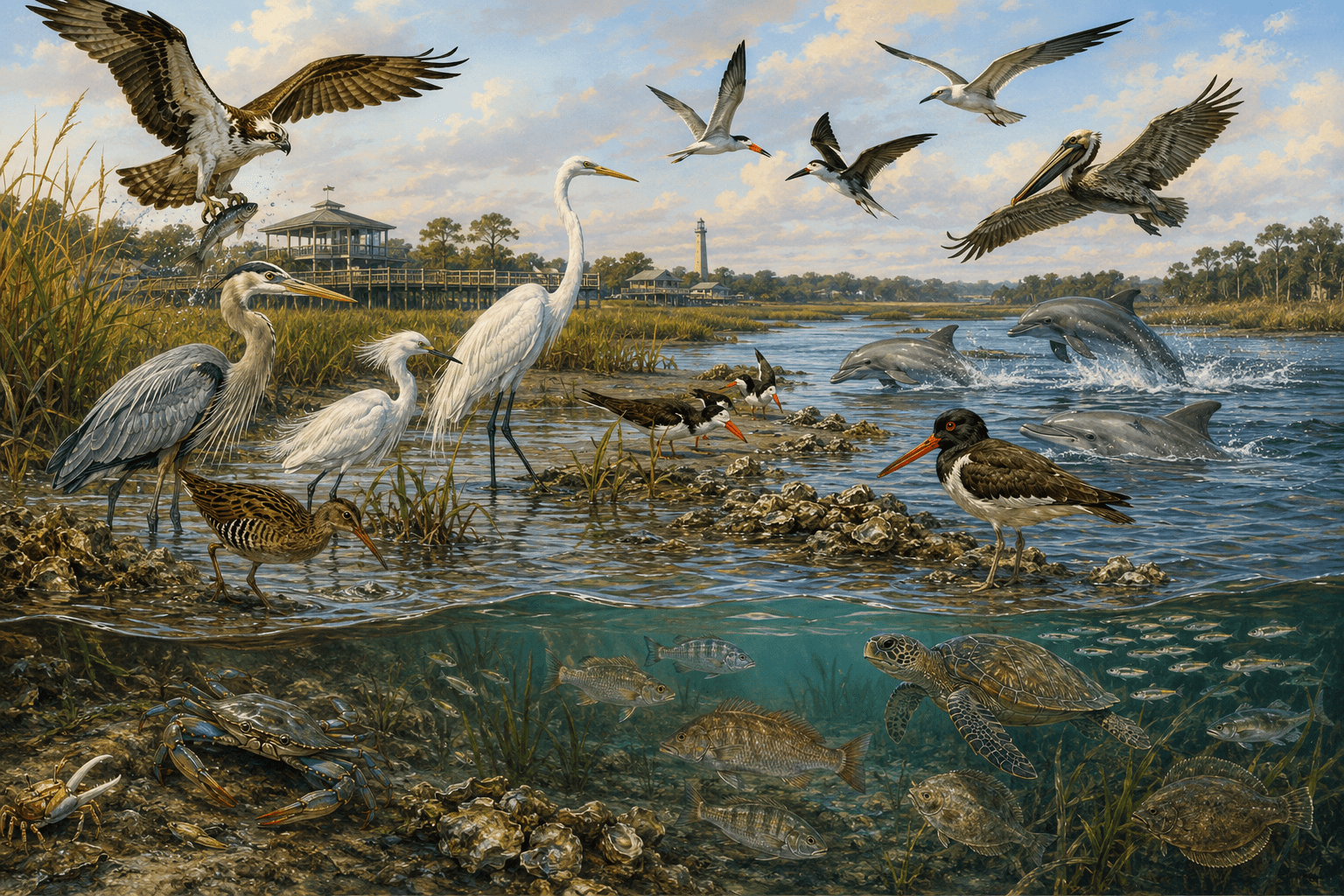
Murrells Inlet is often called the jewel of South Carolina’s coast, and one of the biggest reasons is the incredible wildlife that calls its saltwater estuary home. Stretching between the Atlantic Ocean and thousands of acres of tidal marsh, Murrells Inlet’s ecosystem is one of the most productive natural habitats along the Grand Strand. The inlet’s winding creeks, oyster beds, mud flats, and spartina grass marshes provide shelter, food, and nursery grounds for countless species of birds, fish, mammals, and marine life.
Whether you’re exploring by boat, strolling the MarshWalk, or joining a guided eco-tour, wildlife sightings are one of the highlights of any visit to Murrells Inlet.
Why Murrells Inlet’s Estuary Is So Important
Murrells Inlet’s salt marsh serves as a nursery for fish, shrimp, blue crabs, oysters, and countless other species that are vital to South Carolina’s coastal ecosystem. The twice-daily tides continuously flood and drain the marsh, bringing nutrients throughout the habitat and supporting an intricate food web.
Because of this abundance of food, wildlife thrives here year-round.
Dolphins: The Stars of the Inlet
Few wildlife encounters are as exciting as seeing Atlantic bottlenose dolphins swimming through the creeks and channels of Murrells Inlet. These intelligent marine mammals frequently travel through the estuary while hunting for fish and can often be seen surfacing near boats or feeding along tidal currents.
While dolphins can sometimes be spotted from the MarshWalk or public fishing piers, the best opportunity to see them up close is aboard a Dolphin Watching Cruise. Experienced captains know where dolphins are commonly feeding and traveling, giving guests excellent chances for memorable sightings. Visitors frequently report seeing pods of dolphins throughout the inlet and surrounding waters.
Best Way to Spot Them:
- Dolphin Watching Cruises
- MarshWalk overlooks and piers
- During incoming or outgoing tides
- Early morning and late afternoon
Wading Birds Everywhere You Look
Murrells Inlet is a birdwatcher’s paradise. As tides ebb and expose mud flats and oyster beds, birds flock to the marsh in search of food.
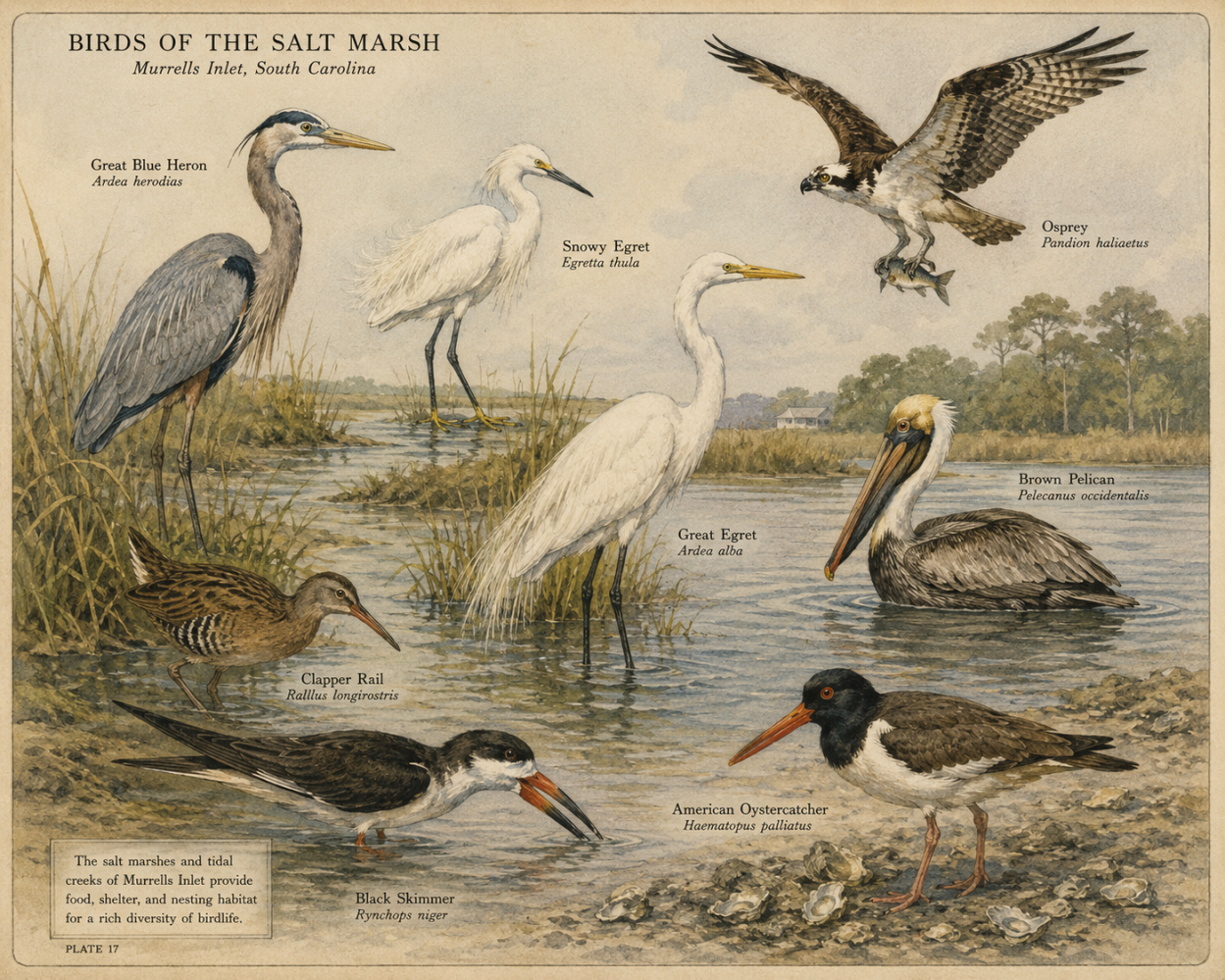
Common species include:
- Great Blue Herons
- Snowy Egrets
- Great Egrets
- Brown Pelicans
- Ospreys
- Clapper Rails
- Black Skimmers
- American Oystercatchers
These birds can often be seen standing motionless in shallow water before suddenly striking at fish or crabs. Ospreys frequently soar overhead carrying fish back to their nests, while pelicans dive dramatically into the water in pursuit of baitfish.
Best Way to Spot Them:
- Saltwater Marsh Cruises
- Kayak excursions
- Walking the MarshWalk
- Visiting nearby Huntington Beach State Park
Blue Crabs, Fiddler Crabs, and Other Marsh Residents
Take a closer look at the marsh during low tide, and you’ll discover an entirely different world. Thousands of fiddler crabs scurry across exposed mud flats, waving their oversized claws while searching for food. Blue crabs use the marsh as an important nursery habitat before moving into larger waterways.
The estuary is also home to marsh snails, oysters, mussels, shrimp, and other invertebrates that form the foundation of the local food chain.
Best Way to Spot Them:
- Saltwater Marsh Cruises
- Eco-tours during lower tides
- Along oyster beds and creek banks
Fish Beneath the Surface
Many popular game fish spend part of their lives in Murrells Inlet’s estuary. Red drum, spotted seatrout, flounder, and other species utilize the marsh creeks as feeding and nursery grounds. The abundance of baitfish throughout the estuary attracts larger predators and supports the area’s thriving recreational fishing industry.
Although fish may not always be visible from the surface, you’ll often see schools of baitfish scattering or birds diving where feeding activity is occurring.
Best Way to Spot Them:
- Saltwater Marsh Cruises
- Fishing charters
- Public docks and fishing piers
Sea Turtles, Manatees, and Other Rare Sightings
While less common, Murrells Inlet occasionally hosts some truly remarkable visitors. Several species of sea turtles inhabit local waters, including loggerhead, green, Kemp’s ridley, and leatherback turtles. West Indian manatees have also been documented within the estuary in recent years.
These encounters are rare but serve as a reminder of just how important Murrells Inlet’s protected habitats are to coastal wildlife.
Experience the Wildlife for Yourself
The best way to experience the wildlife of Murrells Inlet is from the water. A Saltwater Marsh Cruise allows guests to explore the winding creeks and hidden corners of the estuary while learning about the area’s unique ecosystem from knowledgeable local guides. You’ll have opportunities to see birds, crabs, fish, oyster beds, and other marsh inhabitants that many visitors never notice from shore.
For those hoping to encounter dolphins, a Dolphin Watching Cruise offers one of the most exciting wildlife experiences along the South Carolina coast. Watching a pod surface alongside the boat is a memory that often becomes the highlight of a Grand Strand vacation.
Click here for Dolphin Cruise availability!
Click here for Saltwater Marsh Eco Cruise Tour availability!
Plan Your Murrells Inlet Wildlife Adventure
From playful dolphins and soaring ospreys to tiny fiddler crabs and majestic herons, Murrells Inlet’s salt marsh is teeming with life. Every tide brings new activity, making each trip onto the water a unique experience.
Whether you’re a nature enthusiast, photographer, birdwatcher, or simply looking for a memorable family adventure, Murrells Inlet’s wildlife is waiting to be discovered. Book a Saltwater Marsh Cruise or Dolphin Watching Cruise and experience one of South Carolina’s most remarkable coastal ecosystems firsthand.